
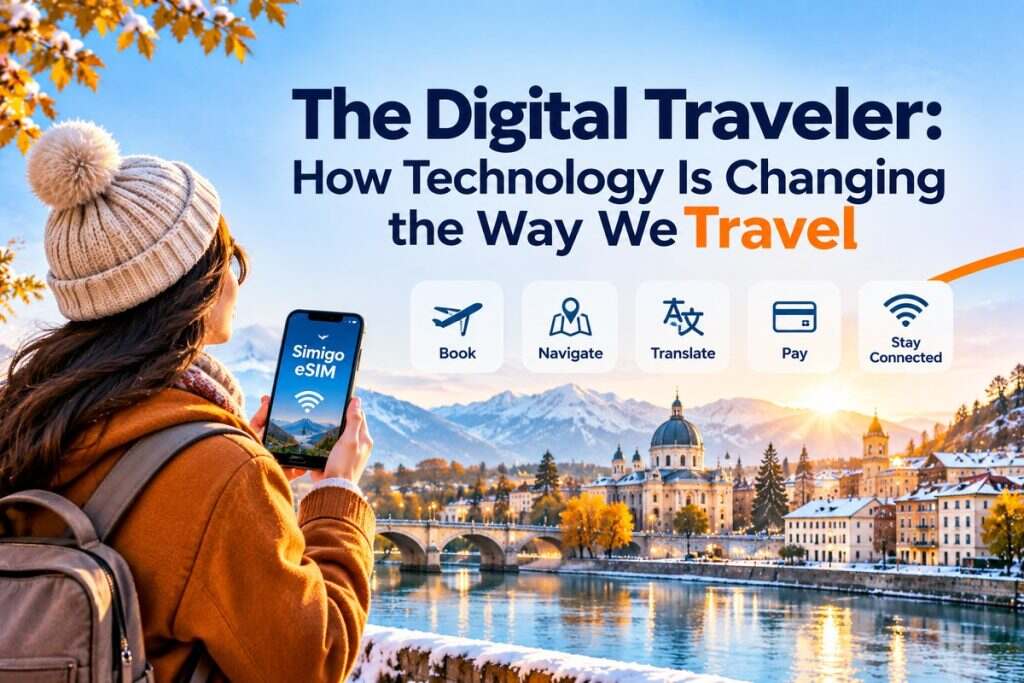
Travel has changed significantly over the years. Planning a holiday once meant visiting travel agencies, carrying printed maps, keeping paper tickets, and depending on local guides for information. Today, much of that experience fits inside a smartphone.
From booking flights and hotels to navigating unfamiliar cities, translating languages, making digital payments, and staying connected with family, technology has become an essential part of modern travel.
This shift has created a new kind of traveller: the digital traveler. These travellers use digital tools to plan smarter, make informed decisions, explore destinations independently, and manage their journeys more conveniently.
As travel technology continues to evolve, connectivity has become just as important as transportation and accommodation. Solutions such as Simigo eSIM help international travellers access mobile data without relying on traditional physical SIM cards.
Let’s explore how technology is changing the way people travel and what it means for the future of tourism.
What Is a Digital Traveler?
A digital traveler is someone who uses technology throughout different stages of a journey. Instead of depending entirely on traditional travel services, they use smartphones, applications, websites, and digital platforms to organise and manage their experiences.
Digital travellers may use technology to:
- Research destinations and compare travel options.
- Book flights, hotels, and transportation online.
- Navigate unfamiliar streets using digital maps.
- Discover restaurants, attractions, and local experiences.
- Translate languages and communicate across borders.
- Make cashless payments.
- Share travel experiences through social media.
- Stay connected through mobile internet and digital communication tools.
Technology does not replace the experience of travelling. Instead, it makes many parts of the journey easier to manage, allowing travellers to focus more on discovering new places.
8 Ways Technology Is Changing the Way We Travel
1. Travel Planning Has Become Easier
In the past, organising an international trip often required significant research and coordination. Travellers had to collect information from guidebooks, travel agencies, brochures, and different service providers.
Today, digital platforms make travel planning much more accessible.
Travellers can compare flight prices, explore accommodation options, read reviews, check destination information, and build itineraries using their smartphones or computers.
Travel planning tools also help users organise important information in one place, including booking confirmations, travel schedules, and activity details.
How it changes travel:
- Travellers can compare multiple options before making decisions.
- Online reviews help them understand other visitors’ experiences.
- Digital itineraries make travel schedules easier to organise.
- Booking platforms reduce the need for lengthy offline arrangements.
This convenience gives travellers greater control over their plans.
2. AI Is Making Travel More Personalised
Artificial intelligence is becoming an important part of the travel experience. AI-powered tools can help travellers discover destinations, generate itinerary ideas, understand travel information, and organise activities based on their interests.
For example, someone planning a family holiday may use AI to find family-friendly attractions, while a solo traveller may look for budget accommodation and interesting local experiences.
AI tools can also assist with:
- Creating personalised travel itineraries.
- Suggesting attractions based on interests.
- Translating travel-related information.
- Organising trip schedules.
- Answering general destination questions.
However, AI-generated recommendations should still be checked against official sources, especially when dealing with entry requirements, transportation schedules, and safety information.
As these tools improve, travellers will have more opportunities to plan journeys around their individual preferences.
3. Mobile Apps Have Changed Navigation
Finding your way around an unfamiliar destination used to require printed maps, local directions, or a tour guide. Digital navigation has made this process significantly more convenient.
Applications such as Google Maps help travellers find locations, explore nearby businesses, check routes, and estimate journey times.
This is especially useful when visiting large cities, changing transportation routes, or exploring destinations independently.
Travellers can use navigation apps to:
- Find hotels, restaurants, and tourist attractions.
- Explore public transportation routes.
- Check walking and driving directions.
- Discover nearby services.
- Save important locations for later.
Downloading offline maps before travelling can also be helpful in areas with limited mobile coverage.
4. Digital Payments Are Simplifying International Travel
Digital payment technology has changed how travellers manage money abroad.
Instead of carrying large amounts of cash, many travellers now use debit cards, credit cards, contactless payments, and supported mobile wallets.
Depending on the destination and merchant, digital payment options can make everyday purchases more convenient.
Common uses include:
- Paying for meals and shopping.
- Booking transportation.
- Purchasing attraction tickets.
- Paying for accommodation.
- Managing travel-related expenses.
However, payment availability varies between countries and businesses. Travellers should always carry an alternative payment method and check international transaction fees with their financial provider before departure.
5. eSIM Technology Is Changing International Connectivity
One of the most useful developments in travel connectivity is eSIM technology.
Traditionally, international travellers often purchased local physical SIM cards after arriving at their destinations. This could involve finding a mobile shop, choosing a package, replacing a SIM card, and configuring device settings.
An eSIM offers a digital alternative.
An eSIM is an embedded digital SIM that allows compatible devices to download a mobile network profile without inserting a traditional physical SIM card.
For international travellers, this can make mobile connectivity easier to prepare before departure.
Why travellers are choosing eSIM technology:
- No need to insert a physical SIM card.
- Digital installation on compatible devices.
- Destination-specific data plans may be available.
- Convenient preparation before travelling.
- Easier access to mobile data when the selected plan becomes active.
Simigo eSIM provides a travel connectivity option for people who want to prepare their mobile data before visiting supported destinations. Travellers can explore available destination plans, select a suitable package, and follow the provided installation instructions.
Before purchasing an eSIM, it is important to check smartphone compatibility, device network restrictions, destination coverage, data allowance, and plan validity.
6. Social Media Has Changed How People Discover Destinations
Social media platforms have become major sources of travel inspiration.
Instead of relying only on traditional travel advertisements and guidebooks, people can discover destinations through travel videos, photographs, creator recommendations, and shared experiences.
A short video featuring a beautiful mountain village or a hidden restaurant can inspire someone to plan an entire trip.
Social media helps travellers:
- Discover less familiar destinations.
- Explore real visitor experiences.
- Find restaurants and local attractions.
- Follow travel creators for practical tips.
- Share their own experiences with friends and family.
However, not every recommendation online is accurate. Travellers should verify important information such as opening hours, prices, and local travel conditions before making plans.
7. Translation Tools Are Making Communication Easier
Language differences can sometimes make international travel challenging. Ordering food, asking for directions, understanding signs, or communicating with local service providers may require additional effort.
Digital translation tools are helping reduce these barriers.
Travellers can use translation applications to convert written text, understand menus, translate conversations, and communicate more confidently.
Some tools also support camera-based translation, allowing users to point their phone at printed text and understand its meaning.
These features are particularly useful when visiting destinations where travellers are unfamiliar with the local language.
8. Digital Travel Documents Are Improving Organisation
Many travel-related documents are now available digitally.
Airline boarding passes, hotel confirmations, booking references, attraction tickets, and travel itineraries can often be accessed through mobile applications or email.
Keeping these documents organised on a smartphone can reduce the need to carry printed copies.
Digital documents can help travellers:
- Access booking information quickly.
- Check flight details.
- Manage hotel reservations.
- Store attraction tickets.
- Keep travel schedules organised.
It is still sensible to keep important documents accessible offline and maintain backups of essential information.
Traditional Travel vs Digital Travel
Technology has changed several aspects of the travel experience. The following comparison highlights some common differences.
| Travel Activity | Traditional Approach | Digital Travel Approach |
|---|---|---|
| Trip planning | Guidebooks and travel agencies | Travel websites and apps |
| Flight booking | Physical agencies | Online booking platforms |
| Navigation | Printed maps | Digital navigation apps |
| Communication | Local SIM or public phones | eSIM and internet-based apps |
| Payments | Mostly cash | Cards and supported digital wallets |
| Translation | Phrasebooks and local assistance | Translation applications |
| Travel documents | Printed tickets and confirmations | Digital tickets and documents |
| Destination discovery | Brochures and recommendations | Social media and online reviews |
Digital tools offer greater convenience, but traditional options can still be useful. A combination of both can make travel more reliable.
The Importance of Internet Connectivity for Digital Travelers
Most digital travel tools depend on internet access. A traveller may have the best navigation application, an organised itinerary, and digital booking confirmations, but accessing them can become difficult without a reliable connection.
Mobile internet is useful throughout an international journey.
For example:
At the airport: Travellers can check flight updates, access booking details, and communicate with their transportation provider.
During city exploration: Mobile data helps with navigation, finding nearby attractions, and checking public transportation information.
At restaurants: Travellers can search for reviews, check menus, and translate unfamiliar information.
During emergencies: Internet access can help travellers contact accommodation providers, family members, or relevant local services.
While travelling between cities: Travellers can check schedules, access maps, and manage updated travel arrangements.
This makes connectivity an important part of modern travel preparation.
How Simigo eSIM Supports the Digital Traveler
As more travel activities move online, having convenient access to mobile data becomes increasingly valuable.
Simigo eSIM is designed to provide a digital connectivity option for international travellers visiting supported destinations.
Instead of purchasing a physical SIM card after arrival, eligible travellers can review available eSIM plans and prepare their connection digitally.
Here are some ways Simigo can fit into a digital travel routine:
Convenient Digital Installation
Travellers with compatible devices can install an eSIM by following the instructions provided with their selected plan. This removes the need to physically insert a new SIM card.
Destination-Based Data Plans
Travellers can review available plans for their destination and select an option based on their expected data usage and trip duration.
Useful for Everyday Travel Activities
Once connected to a supported network, mobile data can help travellers use navigation, messaging, browsing, online booking services, and other internet-based applications.
Preparation Before Departure
Travellers can review their eSIM details and installation instructions before leaving home, helping them prepare for connectivity during their trip.
A Digital-First Travel Experience
eSIM technology fits naturally into the modern travel experience, where bookings, navigation, communication, and destination research increasingly happen through smartphones.
How to Prepare Your Simigo eSIM Before a Trip
Preparing your eSIM before departure can help make your travel experience more convenient.
Follow these general steps:
- Check device compatibility: Confirm that your smartphone supports eSIM and is not restricted by a carrier lock.
- Choose your destination: Visit the Simigo website or app and select your travel destination.
- Review available plans: Compare data allowances, validity periods, coverage, and package details.
- Purchase your plan: Select the package that suits your travel requirements.
- Install your eSIM: Follow the installation instructions provided by Simigo.
- Review activation instructions: Check when and how your selected plan should be activated.
- Connect when required: Follow your plan’s instructions to use mobile data at your destination.
Always keep access to Wi-Fi during installation and check your phone’s settings before departure.
Challenges of Digital Travel and How to Manage Them
Although technology makes travelling easier, depending entirely on digital tools can create a few challenges.
| Common Challenge | Practical Solution |
|---|---|
| Poor internet connection | Download offline maps and essential information |
| Low smartphone battery | Carry a power bank |
| Digital payment failure | Keep an alternative payment method |
| Incorrect online information | Verify details through official sources |
| Data usage running out | Monitor mobile data consumption |
| Lost access to digital documents | Keep offline copies and backups |
| Public Wi-Fi security risks | Avoid sensitive transactions on unsecured networks |
A digital-first approach works best when travellers also prepare for situations where technology may not be available.
What Does the Future of Digital Travel Look Like?
Travel technology continues to develop, and several trends may influence how people explore the world in the coming years.
More Advanced AI Travel Assistance
AI-powered travel tools may become more capable of understanding individual preferences, adjusting itineraries, and providing personalised recommendations.
Smarter Airport Experiences
Digital identity systems, automated check-in processes, and improved passenger information systems may make airport experiences more efficient where these services are available.
Greater Use of Contactless Services
Digital payments, mobile tickets, and contactless access systems are likely to remain important parts of travel services.
More Connected Travel Devices
Wearables, smart luggage, connected translation devices, and other travel technologies may help travellers manage their journeys more efficiently.
Growing Demand for Flexible Connectivity
As travellers use more digital services abroad, convenient international mobile data solutions such as eSIMs are becoming an important part of travel preparation.
The future of travel will likely combine human experiences with digital convenience, giving travellers more ways to explore destinations confidently.
Final Thoughts
Technology has transformed the way people discover destinations, plan journeys, book services, navigate unfamiliar places, and communicate across borders.
The digital traveler no longer needs to depend entirely on printed maps, physical tickets, or local assistance. Smartphones and digital platforms make many travel activities easier to manage, creating a more flexible and connected experience.
However, technology works best when travellers prepare properly. Keeping essential information available offline, protecting digital documents, managing mobile data, and choosing suitable connectivity options can make a significant difference.
With Simigo eSIM, travellers can add convenient digital mobile connectivity to their travel preparation and stay connected in supported destinations.
As the travel industry continues to evolve, one thing is clear: the future of travel is becoming more digital, more connected, and increasingly centred around the traveller.
Frequently Asked Questions (FAQs)
1. What is a digital traveler?
A digital traveler is someone who uses technology, including smartphones, applications, online booking platforms, and digital services, to plan and manage their travel experiences.
2. How has technology changed the way we travel?
Technology has made travel planning, booking, navigation, communication, payments, translation, and destination discovery more convenient through digital platforms and mobile applications.
3. Why is internet connectivity important for modern travellers?
Internet connectivity helps travellers access maps, booking details, transportation updates, translation tools, communication applications, and other useful online services while abroad.
4. What is an eSIM, and how does it help travellers?
An eSIM is a digital SIM embedded in a compatible device. It allows travellers to install a mobile network profile digitally without inserting a physical SIM card.
5. Can I use Simigo eSIM while travelling internationally?
Simigo eSIM can be used in destinations supported by the selected plan, provided the smartphone is compatible and eligible. Always check current destination coverage and plan details before purchasing.
6. Should I install an eSIM before travelling?
Installing an eSIM before departure can make preparation easier. Follow the specific installation and activation instructions provided with your selected plan.
7. What apps are useful for digital travellers?
Navigation apps, airline and hotel booking apps, translation tools, digital payment services, weather applications, and travel planning platforms can all be useful during international trips.
8. Is digital travel completely replacing traditional travel methods?
No. Digital tools make many travel activities more convenient, but printed backups, cash, physical identification, and local assistance can still be important in certain situations.