
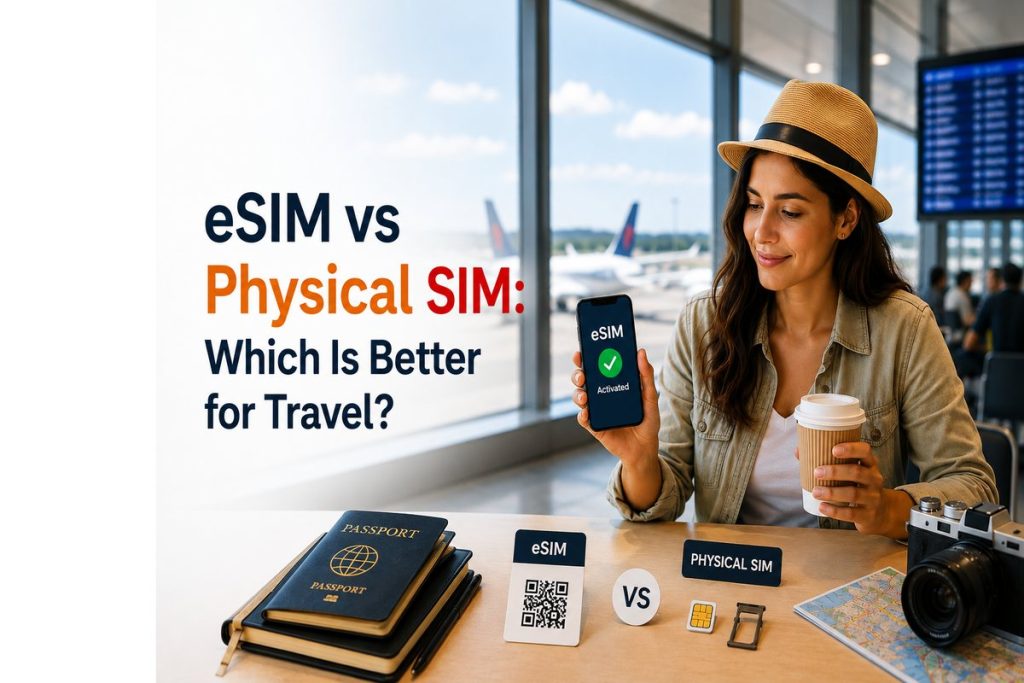
Introduction
Staying connected while traveling abroad is no longer optional—it’s essential. From maps and bookings to communication and work, mobile data plays a key role in every trip.
Traditionally, travelers depended on physical SIM cards or international roaming. But now, eSIM technology is changing the game.
If you’re confused between an eSIM and a physical SIM for travel, this guide will help you make the right decision based on real travel needs.
Understanding the Basics
What is an eSIM?
An eSIM is a built-in digital SIM that allows you to activate a mobile network without inserting a physical card. You can simply scan a QR code and start using a data plan.
It is widely used today for:
- International travel
- Remote work
- Multi-country connectivity
What is a physical SIM?
A physical SIM is a removable chip that connects your phone to a mobile network. For travel, users usually buy a new SIM at the destination or rely on roaming.
While it has been the standard for years, it comes with limitations in terms of flexibility and convenience.
Key Differences Between eSIM and Physical SIM
| Feature | eSIM | Physical SIM |
| Setup | Digital activation | Manual insertion |
| Time Required | Few minutes | Can take longer |
| Purchase | Online | Offline store |
| Flexibility | High | Limited |
| Risk | Cannot be lost | Can be misplaced |
| Travel Usage | Multi-country support | Often country-specific |
Which is Better for International Travel?
eSIM: Best for Convenience and Flexibility
eSIM is designed for modern travelers. It allows you to:
- Activate before your trip
- Switch between countries easily
- Avoid physical handling
- Stay connected instantly after landing
For travelers visiting multiple countries or those who prefer a smooth experience, eSIM is the better option.
Physical SIM: Best for Limited Use Cases
A physical SIM may still work if:
- Your phone doesn’t support eSIM
- You need a local number for calls
- You prefer buying from local stores
However, this often involves time, effort, and sometimes higher costs.
Cost Comparison: eSIM vs Physical SIM
When it comes to pricing, both options vary depending on location and usage.
- eSIM plans usually offer transparent pricing with prepaid options
- Physical SIM cards may appear cheaper initially but can include hidden costs
- Roaming with a home SIM is usually the most expensive option
For most travelers, eSIM provides better value for money, especially for short trips and multi-country travel.
Real Travel Scenarios
Multi-Country Trip
If you’re visiting multiple countries, eSIM is highly convenient. You can use a single plan without changing SIM cards.
Short Vacation
For short trips, eSIM saves time and effort. No need to stand in queues or search for SIM vendors.
Business Travel
Reliable and instant connectivity makes eSIM a strong choice for professionals who need uninterrupted internet.
Long-Term Stay
In some cases, a physical SIM may be useful if you need local calling and long-term plans.
Why Many Travelers Prefer eSIM in 2026
The shift toward eSIM is growing rapidly due to:
- Ease of use
- Faster activation
- Better travel experience
- Reduced dependency on local stores
- Improved global coverage
As more devices support eSIM, it is becoming the standard choice for international travel.
Choosing the Right Option
Before deciding, consider:
- Your phone compatibility
- Travel duration
- Number of countries you plan to visit
- Your need for local calling vs data usage
If your priority is convenience, flexibility, and quick setup, eSIM is the better choice.
Why Simigo is a Reliable Choice
For travelers looking for a smooth eSIM experience, Simigo offers:
- Global coverage across multiple countries
- Affordable prepaid plans
- Quick and easy activation
- Consistent network performance
It is designed for travelers who want a simple and reliable connectivity solution without complications.
Conclusion
Both eSIM and physical SIM have their place, but the difference is clear in 2026.
eSIM offers a faster, easier, and more flexible way to stay connected while traveling internationally. It removes the need for physical handling and provides a seamless experience from start to finish.
If your device supports it, choosing an eSIM can make your travel smoother and more efficient.
Frequently Asked Questions (FAQs)
1. Is eSIM better than a physical SIM for travel?
Yes, for most travelers, eSIM is more convenient and flexible, especially for international trips.
2. Can I switch between eSIM and physical SIM?
Yes, many smartphones support dual SIM functionality, allowing you to use both.
3. Is eSIM suitable for short trips?
Yes, eSIM is ideal for short trips, as it can be activated instantly without any setup hassle.
4. Do I need internet to activate an eSIM?
Yes, a stable internet connection is required to download and activate your eSIM profile.